
Global Housing Crisis
Economy
© Constency Publishing
10/24/20252 min read
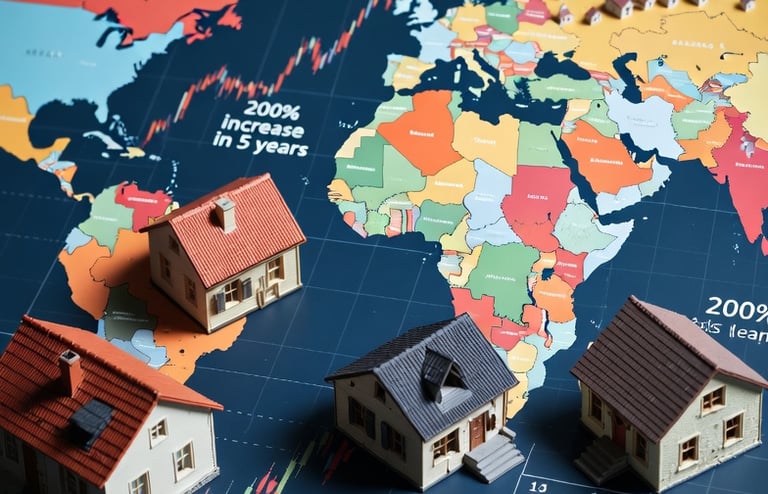

The dream of homeownership has faded for millions worldwide, while skyrocketing rents force low-income families into precarious living. This affordability emergency, driven by wealth inequality, undermines mental health and community ties. Real solutions require confronting structural inequities, not temporary patches.
Affordability in Freefall
Across 95 major urban markets in eight nations, no market qualifies as "affordable" for median-income households in 2025. Globally, house prices now average 8-10 times annual median income in many high-demand areas, up from 3-5 times in the 1980s, turning homes into elusive assets for most. In advanced economies, affordability indices have plunged: from 150 in 2021 to the mid-80s by 2024 in one major economy, and from 105 to the low 70s in another.
Renters face parallel woes. EU rents rose 27.8% from 2010 to early 2025, with surges over 100% in some nations; vacancy rates hover at historic lows of 5-7% in tight urban markets. Nearly 10% of urban households spend over 40% of income on housing, signaling widespread stress. An estimated 2.8 billion people (40% of the global population) lack adequate housing, secure land, or basic services.
Supply lags demand dramatically: targets for hundreds of thousands of new units annually in growing regions are missed by 20-50%, fueling price spirals.
Wealth Inequality and Housing
Housing amplifies disparities: the top 1% owns 42.7% of financial wealth, while the bottom 80% holds just 7%, with property as a key divider. Millionaires capture nearly half of global personal wealth, often via real estate. Investor tax breaks in many nations reward the affluent, concentrating 80%+ of properties among the top quintile. This generational chasm locks out younger buyers, with wealth Gini coefficients rising in unequal markets like those in Latin America and parts of Europe.
Social Consequences
Insecurity breeds mental strain: unstable housing correlates with 20-30% higher anxiety and depression rates, especially amid "double precarity" of job and home instability. Evictions and moves erode agency, delaying families and careers. Marginalized groups endure discrimination, worsening isolation, homelessness hit record highs, up 18% in one region alone to over 770,000 in 2024. Communities fray as relocations sever networks.
Structural Drivers
Decades of investor-favoring policies, underfunded public housing, and rigid zoning have tilted markets. Social stock trails population booms, shoving low earners into private rentals amid supply shortages. Speculation inflates values, with global prices flat in real terms recently but unaffordable in bubbles like those in Asia and North America.
Global Lessons
Nations succeeding in social housing and "housing first" policies have cut homelessness by 50%+; mid-20th-century prefab drives lifted standards dramatically in Europe.
This crisis calls for urgent, inclusive action to make housing a right, not a privilege—fostering equity and resilience worldwide.
Constency
© 2025. Constency Global. All rights reserved.
Constency is the brand used by independent audit and consulting firms, each of which is a separate and independent legal entity. Each firm and related entity cannot obligate or bind each other in respect of third parties. Each firm and related entity is liable only for its own acts and omissions, and not those of each other.