
Benchmarking your company
Economy
© Constency Publishing
6/17/20221 min read
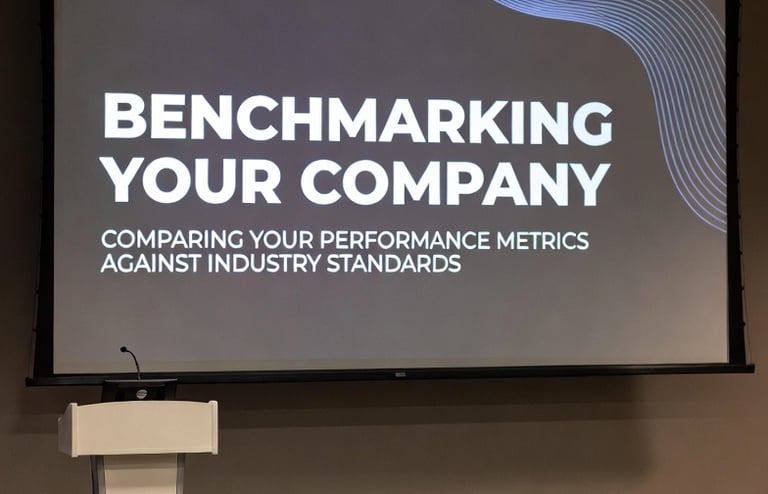
Benchmarking empowers any business (manufacturing, retail, tech, services, or beyond) to gauge performance against peers in the same market. By comparing metrics like revenue per employee, customer acquisition costs, operational efficiency, profitability, and innovation rates, firms uncover strengths, expose gaps, and spark targeted improvements. Originating in the 1970s with competitive cost analysis, the practice exploded across industries, fueled by global surveys, national databases, and specialized reports delivering richer, real-time insights than ever.
Core Benefits
Benchmarking saves immense effort: pre-compiled data reveals industry norms without exhaustive internal research. It accelerates adaptation to shifting dynamics: pricing models, supply chains, regulations, or digital tools. Beyond finances, it highlights holistic wins: subscription-based revenue, agile marketing, sustainable practices, or employee retention strategies. Small enterprises and startups gain equally: reports tailored to scale help set realistic goals, track progress, and avoid isolation in competitive landscapes. Strategically, benchmarking informs staffing, investments, partnerships, and long-term planning, providing evidence for stakeholder discussions and proactive trend-spotting to preempt crises.
Key Limitations
Yet, benchmarks harbor flaws. Selection bias dominates: data draws from surviving entities, omitting failed ones, potentially glorifying flawed practices. Samples often skew toward larger corporations, ignoring nuances like regional economics (urban vs. rural costs), market maturity, or focus areas (core vs. innovative services). Reports age rapidly amid economic volatility, tech disruptions, or regulatory changes. Smaller firms may struggle with analysis resources or implementation. Worst, chasing a mediocre industry average breeds complacency, especially in low-margin sectors plagued by overwork, stifling true innovation.
Maximizing Impact
Success demands scrutiny: verify sample size, firm scale, location, and specializations. Start with one metric—pricing, margins, or salaries—and prioritize reports mirroring your context. Above all, track your own historical performance; internal trends often prove more telling than broad benchmarks. Use reports to exceed averages, turning insights into proactive growth.
In today’s hyper-competitive world, thoughtful benchmarking evolves from mere comparison to a strategic compass, driving efficiency, resilience, and breakthrough growth across all company sizes and sectors.
Constency
© 2025. Constency Global. All rights reserved.
Constency is the brand used by independent audit and consulting firms, each of which is a separate and independent legal entity. Each firm and related entity cannot obligate or bind each other in respect of third parties. Each firm and related entity is liable only for its own acts and omissions, and not those of each other.