Balancing inflation and unemployment
Economy
© Constency Publishing
12/23/20221 min read
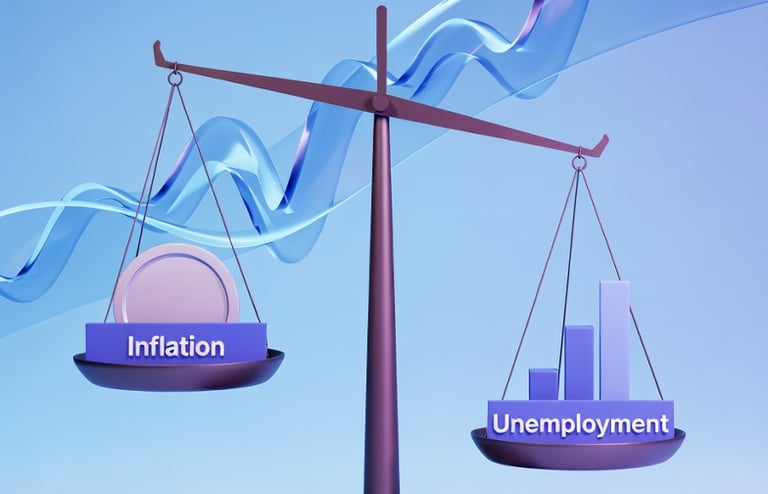
Central banks worldwide aim to maintain a healthy economy through a delicate balance: keeping inflation low and stable while achieving full employment. Inflation targets typically range from 2-3% annually, measured by consumer price indices. This stability supports growth; excessive inflation erodes purchasing power, while deflation stifles activity.
Full employment means most people seeking work can find it quickly. It maximizes workforce use, boosts output, living standards, and equity, especially for vulnerable groups like youth or low-skilled workers.
These goals can conflict. Since mid-2021, inflation has surged above targets in many developed economies post-lockdowns, prompting rate hikes. Central banks raise official rates (e.g., on interbank loans), pushing up borrowing costs for mortgages and business loans. This cools demand: households cut spending on essentials and leisure; firms face higher costs, reducing investment.
A key side-effect is slower job growth and rising unemployment. As demand falls, labor needs decline. Rate increases since mid-2022 have notably slowed employment expansion, with unemployment climbing from historic lows.
Banks strive for a "narrow path"—curbing inflation with minimal job losses. Some economies have hiked rates less aggressively, limiting unemployment rises despite higher labor participation.
Looking ahead, key questions emerge:
When to cut rates? Views differ on economic strength and goal priorities. Banks often prioritize inflation if labor markets remain resilient, but signals of no further hikes suggest easing may near as inflation moderates.
What is full employment? Estimates vary; many target 4.25-4.5% unemployment to avoid wage pressures fueling inflation. Others argue lower rates (e.g., 3.5%) are possible without instability.
Better demand management tools? Rate policies create uneven impacts—borrowers suffer, savers gain—and have uncertain timing/effects. Alternatives include adjusting mandatory savings contributions or consumption taxes to influence spending without broad rate changes.
Ultimately, any demand-restricting policy involves trade-offs, but exploring diverse tools could reduce reliance on interest rates alone.
Constency
© 2025. Constency Global. All rights reserved.
Constency is the brand used by independent audit and consulting firms, each of which is a separate and independent legal entity. Each firm and related entity cannot obligate or bind each other in respect of third parties. Each firm and related entity is liable only for its own acts and omissions, and not those of each other.