
Autonomous General Ledger
Finance Transformation - Global
© Constency Publishing
11/17/20251 min read
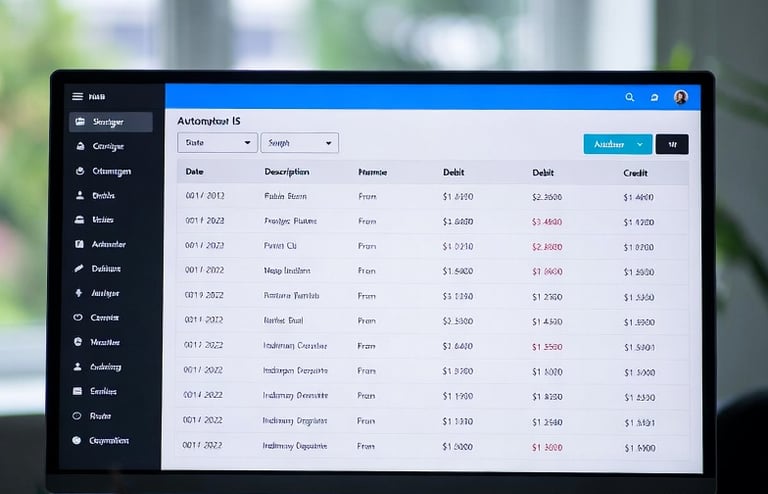

Digits, an AI-native accounting platform, claims to deliver the world's first Autonomous General Ledger (AGL), promising to transform bookkeeping from a manual chore into a fully automated process. Backed by nearly $100 million from investors including Google Ventures, Benchmark, and SoftBank, the startup has emerged from years of development to challenge incumbents like QuickBooks, Xero, and NetSuite. With pricing starting at $100 per month for small businesses and early adoption by hundreds of firms and thousands of clients worldwide, Digits is already processing workflows trained on over $825 billion in transactions across diverse markets.
Traditional cloud accounting tools have offered auto-categorization for over a decade, yet they still demand human oversight for approvals and reconciliations. Digits breaks this mold with a vector-graph data model, replacing outdated relational databases. In this interconnected system, vendors, customers, invoices, and accounts form a semantic web enabling AI to grasp financial context.
Unlike large language models (LLMs), Digits employs specialized predictive models with confidence thresholds. High-confidence transactions, averaging 93-95% of inflows, are auto-booked 24/7, reconciled against bank statements down to the document level, and used to generate flux analyses and reports in real time. Low-confidence items surface for review, minimizing errors while enabling month-end closes in hours rather than days.
This "layer cake" architecture layers business-tailored models atop firm-wide and global datasets, falling back to LLMs only for novel cases. By linking everything as objects, Digits uncovers insights—like clustering similar vendors—that relational systems overlook, such as treating the same entity as both supplier and client without workarounds.
Incumbents face a dilemma: their legacy databases, built over 20-30 years ago, treat transactions as isolated text rows, capping automation at 70-80% accuracy even with added AI layers. Rebuilding would demand multi-year overhauls, so they're opting for chatbots atop old foundations. Emerging "large action models" could let AI agents navigate these tools via protocols, potentially leveling the field—but Digits' native design gives it an edge in speed and precision.
Digits isn't yet 100% autonomous. As AI evolves, it signals accounting's shift toward proactive, context-aware systems.
Constency
© 2025. Constency Global. All rights reserved.
Constency is the brand used by independent audit and consulting firms, each of which is a separate and independent legal entity. Each firm and related entity cannot obligate or bind each other in respect of third parties. Each firm and related entity is liable only for its own acts and omissions, and not those of each other.